 Kaleidoscope III
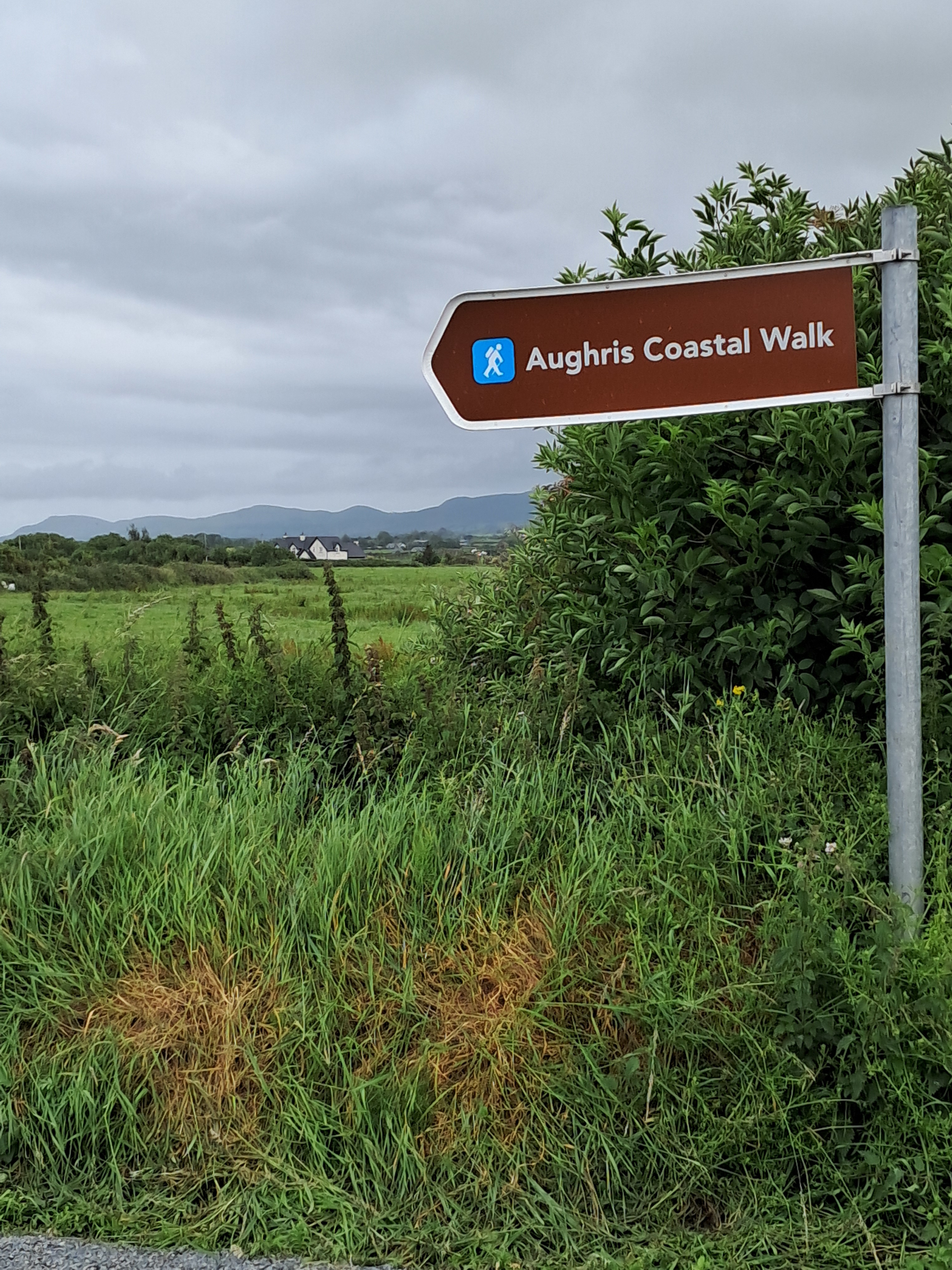
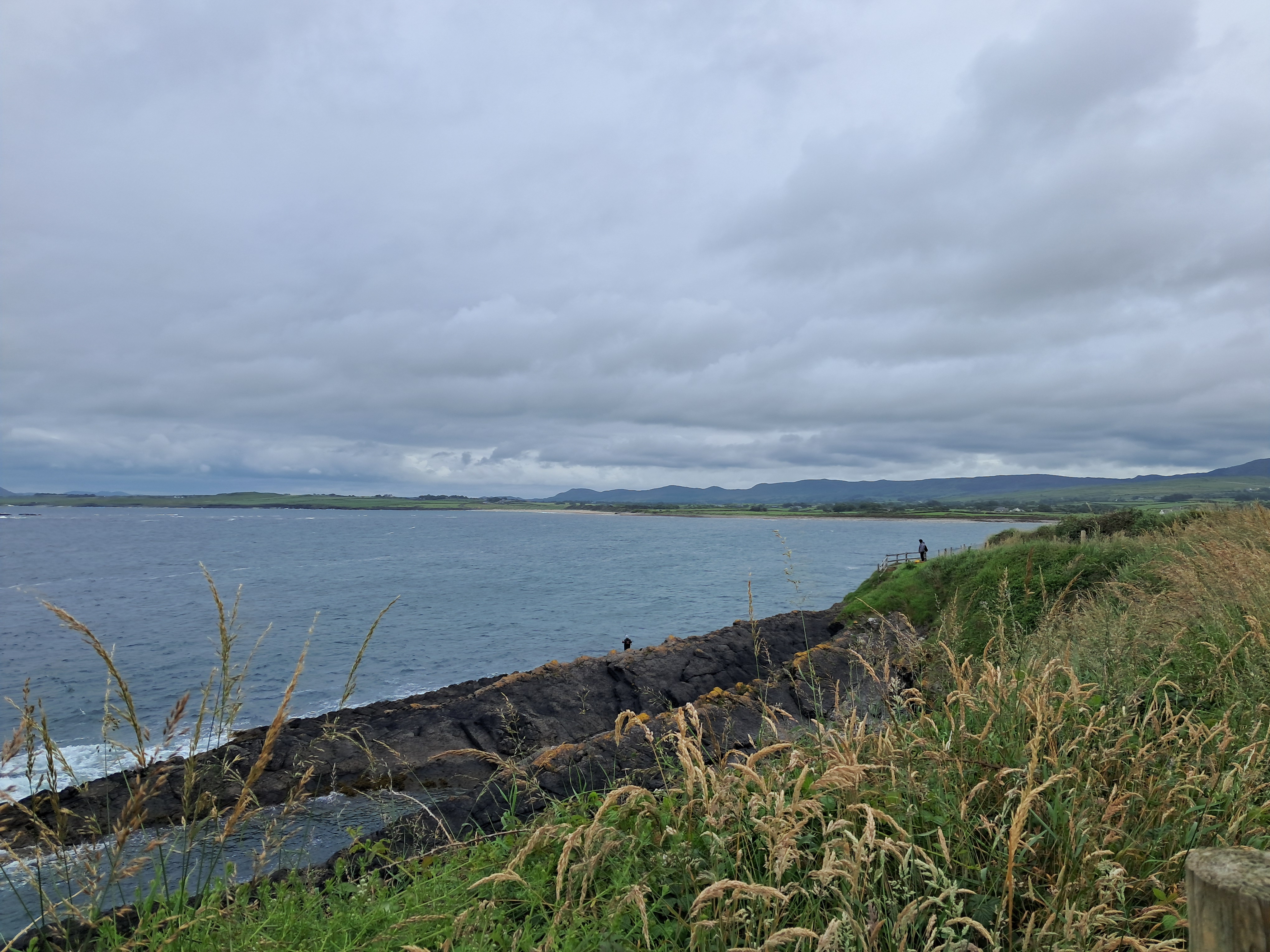
A pint-sized Camino, less a Way than a Stroll, on the north-west coast of County Sligo, out on the Aughris headland. Barely four kilometres but each of the four quite dramatic in its way. I’ve walked it often enough to know what to expect from its twists and turns. This afternoon, the sky flips between downpour and drizzle, and the temperature, for July, clings sourly to the mid-teens. A coastal breeze, stiff enough to coat my spectacles with salt, deflects most of the would-be, so-called pilgrims back into the Beach Bar.
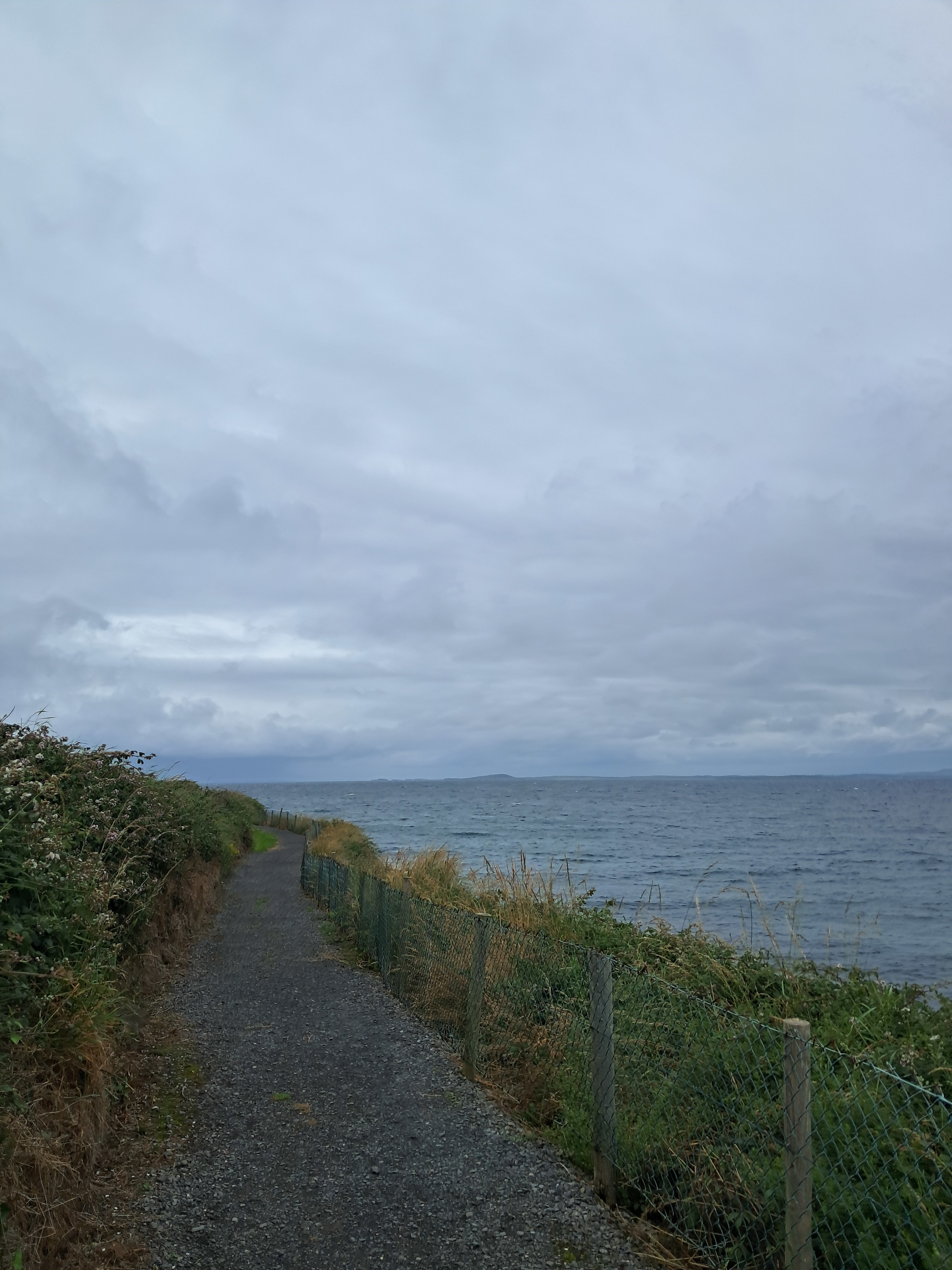
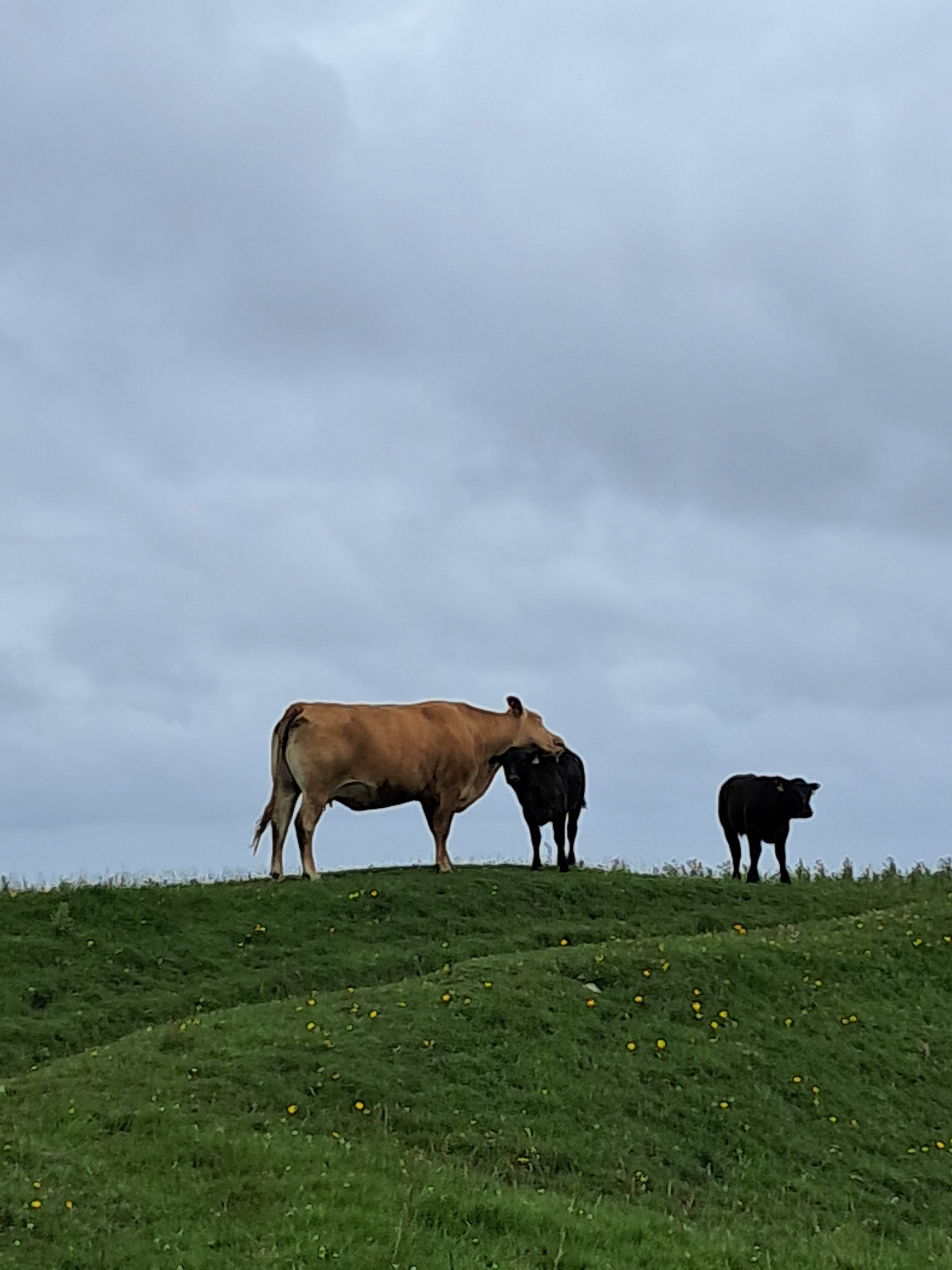
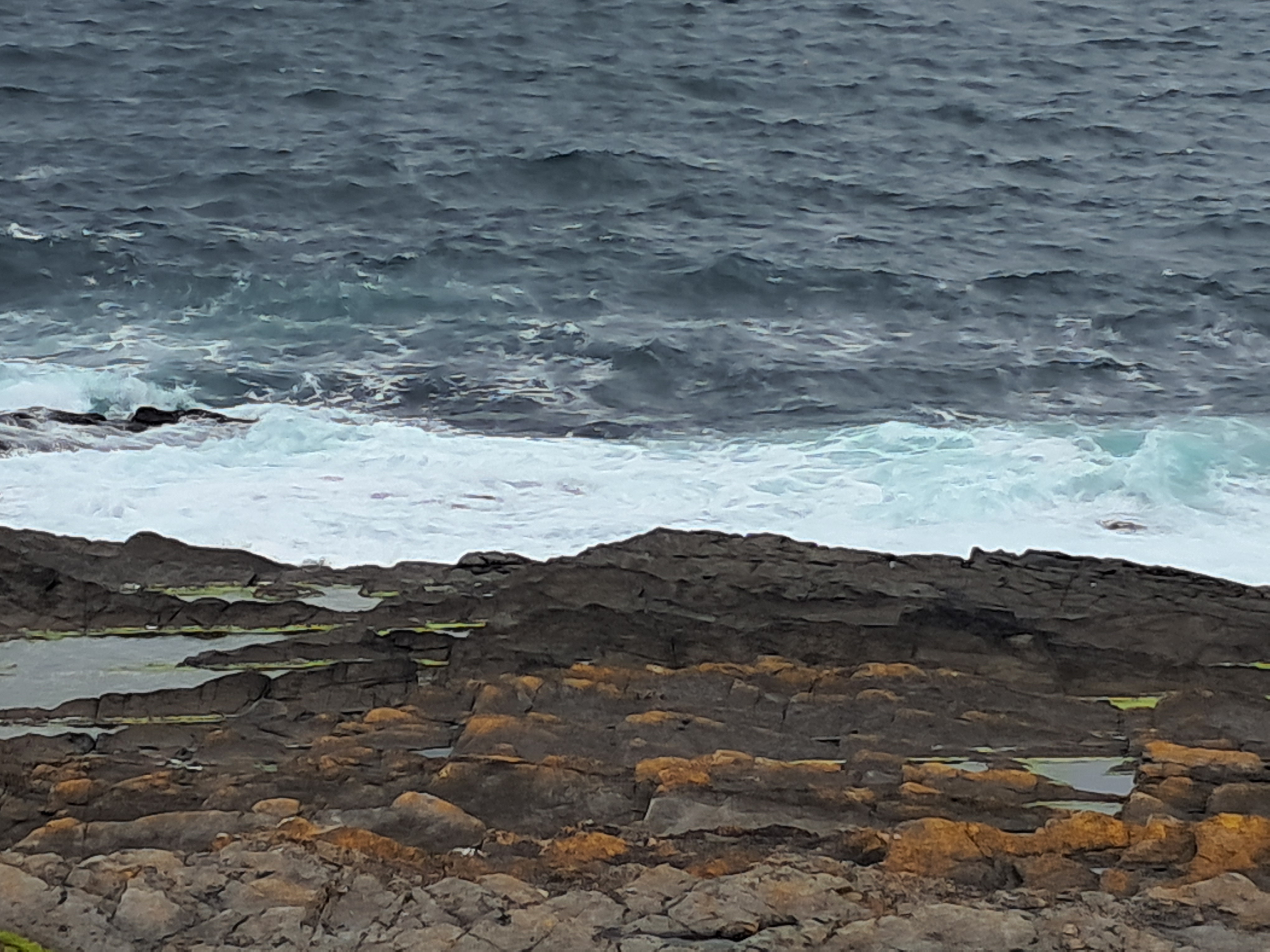
Nicely-written information panels punctuate the walk. Aughris Pier, I learn, was a site of an 1890 assembly with Charles Stewart Parnell, an Irish language movement rally a decade later, and an anti-conscription rally in 1918. No sign of any gatherings today, unless it is seagulls skirring and screeching down on the rocks, or the dozen or so too frisky-looking bullocks darkening the far too delicate-looking wire fence to my left.
Precious little sign either of the promontory fort raided by Vikings in the ninth century. Legend has it that from Innismurray, they spotted the monastery on Aughris Headland and came over to carry away its hoard of gold. That seems unlikely to me. A fort is not a monastery; a monastery isn’t a fort: they don’t even look alike. Already, to my eyes, the graft of religion onto the secular seems strained. I object to the idea that a Viking raid on a monastery is, somehow, worse than a raid on a promontory fort, its families hunkering, terrified, within. ‘Fairy stories’, I think. Religion claiming, as we know it does, whatever lies in its way.
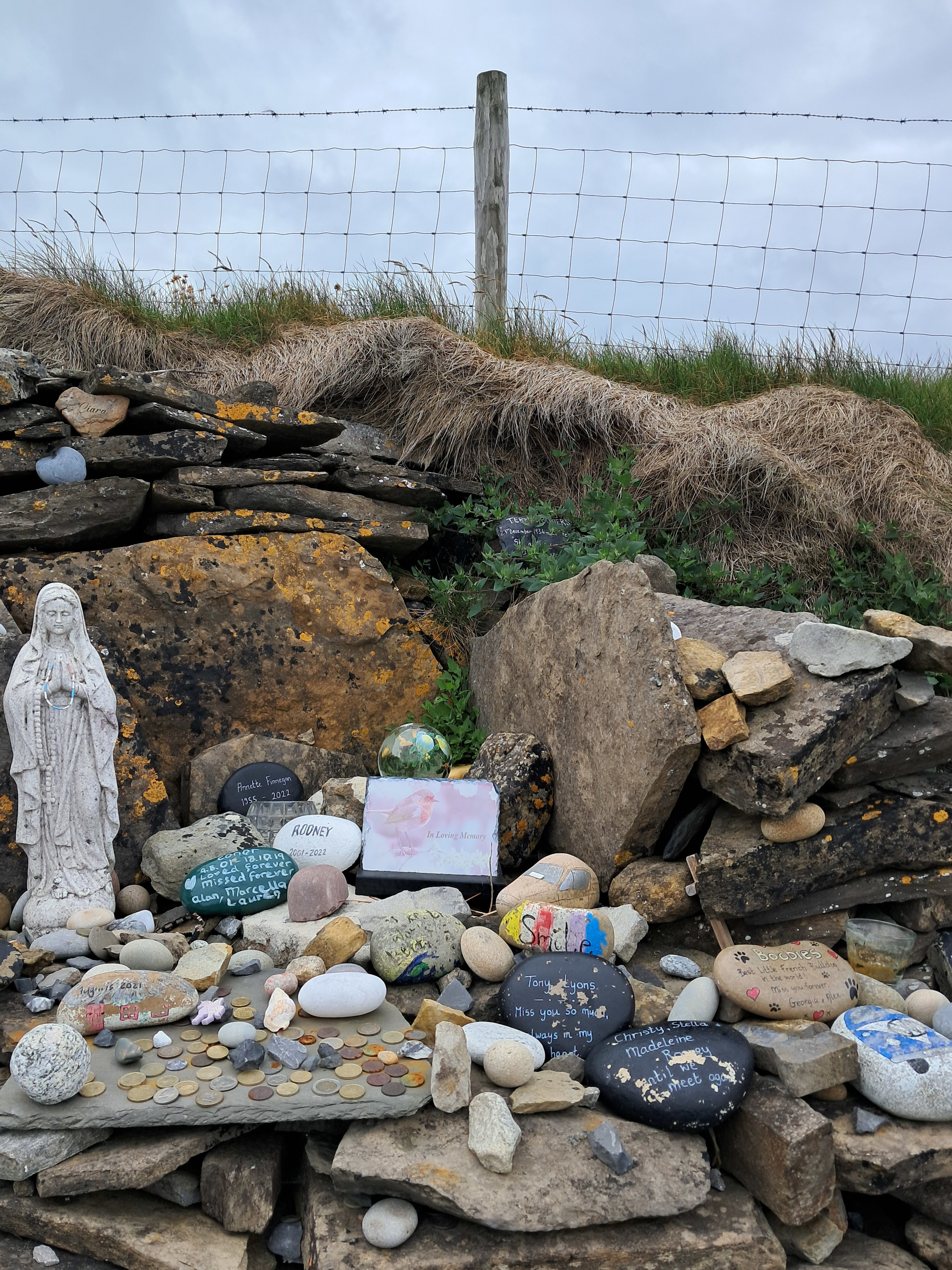
No disputing St Patrick’s Well though, with its plaster statue of the Virgin Mary and the imposing wooden cross with the small black square at the centre, for all the world like Malevich’s Black Square, silhouetted against Sligo Bay. Beside the statue are all sorts of coins, unstolen; a candle; a paperweight; cheerily painted stones with writing remembering loved ones (‘for Christy until we meet again’; ‘for Tony, always in my heart’; ‘Conor – loved forever, missed forever’; ‘Boobies: best little friend bulldog’). On the grass by the well is a long-handled ladle, unstolen, for people to dip in the water and drink from. I do: it tastes silvery, somehow. The way a full moon’s light in August might just taste.
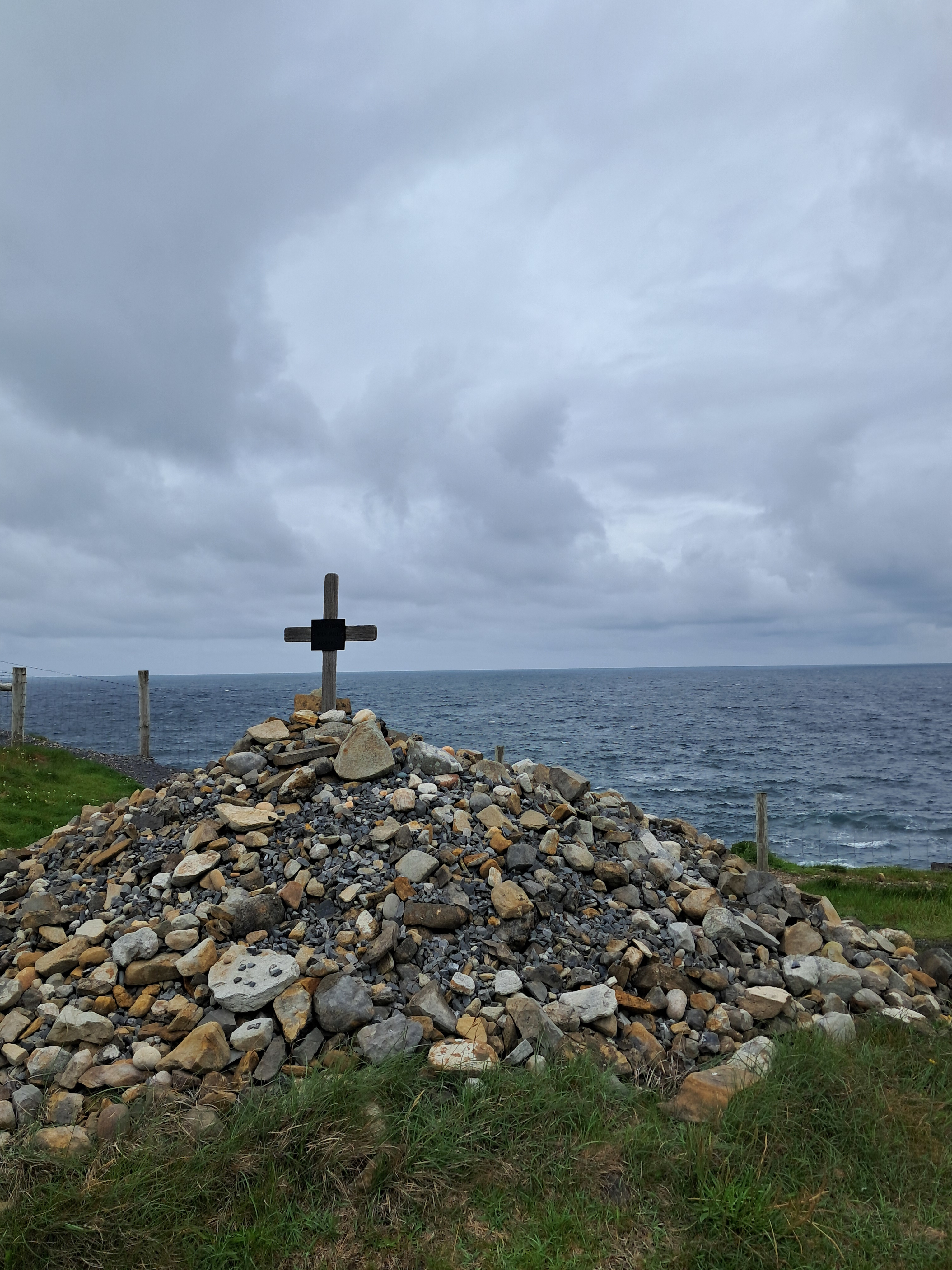
A sign invites us to ‘pick up 3 pebbles, recite prayers and then toss the pebbles onto the pile of stones in the centre of the enclosure’. It’s an impressive pile of stones, a veritable cairn, so it looks as though many visitors do just what the sign says to do. But why? Even allowing for the pull of tradition, I’m wondering what small sense of belonging will follow from doing as others have done. Without the cross and statue there, I’d see those stones, I know I would, as welcome evidence of the bones of paganism poking through the skin of Catholic observance. But this version of the Virgin Mary is familiar from every grotto and church niche in the country: there’s no disguising her. She’s definitely not Brigid or any pre-Christian goddess, though her left leg, bent at the knee, reminds me of the stance favoured by models and the kind of influencers who will never be models but might try, for the photograph, to stand like one. The benign blandness of Mary’s countenance and studied meekness of those downcast eyes make her look, to me, like a chided child desperately hoping to slither out of punishment for some wrongdoing. ‘Shoplifting’, I say out loud, eyeing the robes and mantle under which, I reckon, she could stow a multitude of small things – lipsticks, 10 packs of cigarettes, a card of silver plate earrings from Claire’s, maybe -at a push- a book of poems.
Maybe, I think, she has under there, not stolen merchandise from Sligo shops, but more dangerous or subversive reading material that the loneliness of the Aughris Promontory gives her a private chance to peruse. A copy, perhaps, of the report of the O’Toole inquiry into abuse of children in special schools by nuns? Or the 2013 report on the enslavement and abuse of women in Magdalen Laundries, and the state collusion in that? Or the 2021 report of the Mother and Baby Homes Commission? Perhaps that’s what she was reading and had to quickly stuff in the folds of her robes when she heard me approach?
Flimsy and paper-thin in its strategy, my line of argument. But any more fanciful than the holding fast to any expression of adherence to a Church debunked and defiled by abuse scandals?
What if I say I don’t understand why any Irish parent would allow their child to be baptized, confirmed or given ‘Holy’ Communion by its representatives, no matter how decent a man any of them might appear to be? (Or, even, to be.) I could point out he still adheres to an institution that is nakedly bigoted, cruel, repressive, persistent in its claim to authority over bodies (especially women’s bodies) and thoughts that are nothing to do with it, in the right-thinking run of things. What if I say I refuse to accept that this institution has repaired itself and made sufficient reparations to the extent that in any way permits it to be reckoned now a force for good in Irish society? Or that I don’t understand why people still think it acceptable - after all the clerical child abuse scandals and the failure of the Church to adequately acknowledge its facilitating role in them - to attend that Church, to go to Mass or confession, to give it money, to show it respect, or even to mark themselves down on a census as ‘Catholic’? Or that I simply can’t account for how anyone thinks the mass they attend has no relationship to the scandals we’ve endured, and that probably continue to be perpetrated in some form by its representatives, in some other more innocent country, perhaps, than Ireland is now?
Well then I would give offence to people, including some close to me, who still choose to adhere to this religion for reasons of family tradition, social conservatism, or even, god help us, faith. And perhaps I don’t want to, for reasons of affection and respect - not for a Catholic Church that has been the cause or the agent so much damage and suffering that I, for one, cannot forgive it, cannot turn the blind eye it advocates - but for perfectly decent, kind and thoughtful people who mean something to me.
What is it they find in such a Church? Comfort, I suppose. Consolation in the hope that all this living business, no matter how frantic, disappointing, disquieting or debased, has inherent value and purpose. Help at times of grief (perhaps the only use I can credit for religious observance). Solace in communal ritual. The reassurance of being one person in a group of people saying the same words and believing them, at least to some extent; at least for the duration of the saying. I imagine the comfort of religious ritual is much the same as the buzz of going to, say, an Oasis concert, belting out the songs you knew when you were young and hopeful and glorious, songs that hold out the tantalising promise that you can be all that again, for three minutes, every time. Not great songs, necessarily, but familiar and unchallenging, easy to fall into or pick up, and giving pretty good bang for your buck with, in the case of religion, the added perk of the promise of eternal salvation. Definitely. Maybe.
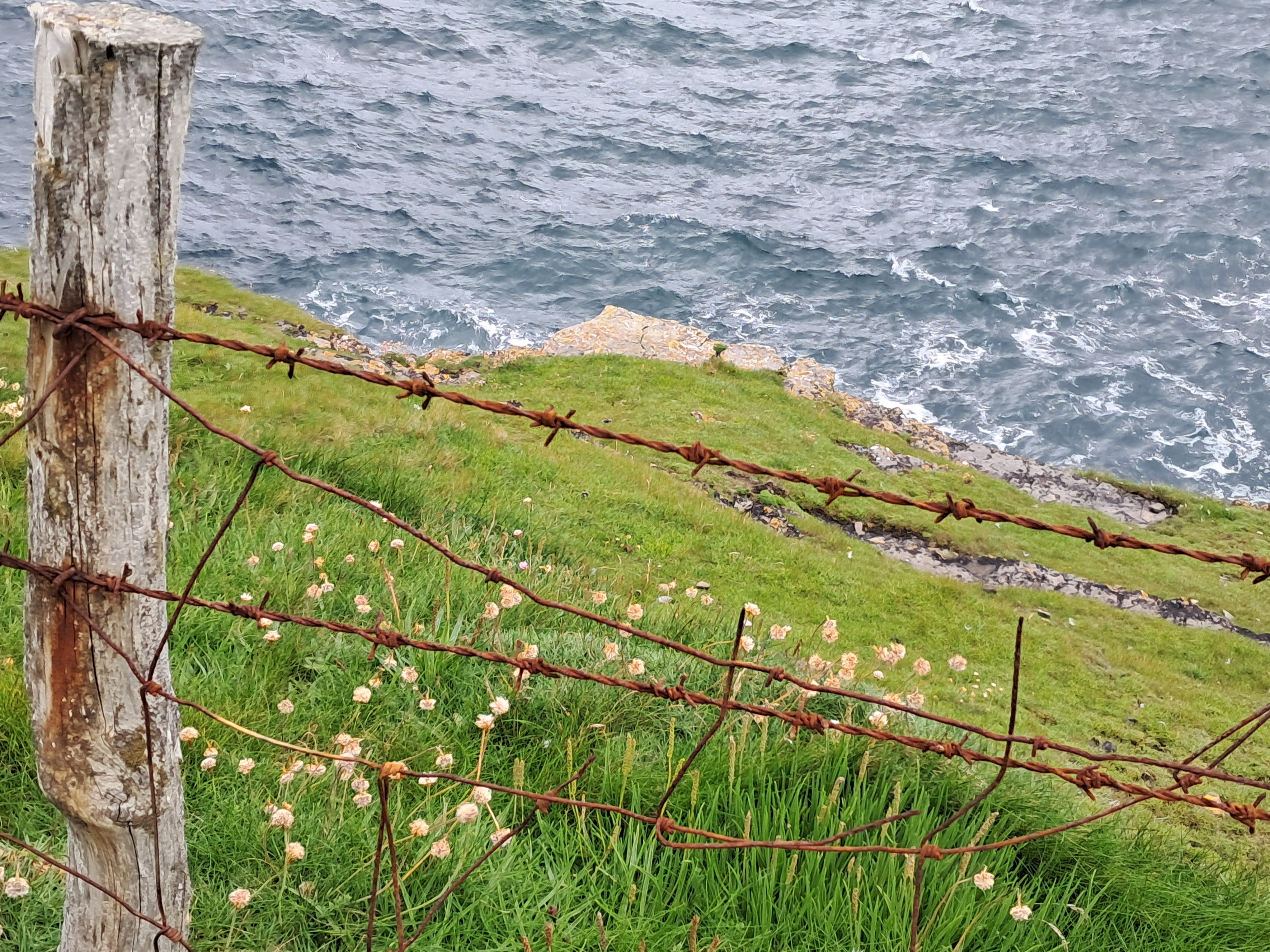
Religious scepticism is a lonely high horse, in Ireland, even now. Sincere and morally understandable, perhaps, but standing alone on a remote headland with a mean wind coming in off the Atlantic, the grass damp and slippy underfoot, the fall from the path steep and sheer onto rough rocks below…. I feel it might be a somewhat narrow position to adopt. What if I’m wrong? The strategist in me (or the bit of me given to superstition, or to the residual smears of an Irish Catholic upbringing), wonders if my usual iconoclasm might be a little foolhardy, right now. No one knows where I am. No one knows where to look for me if I don’t come home later on. I could just find three pebbles and say, ‘I pray not to fall off this cliff on my walk’, and mean it sincerely, and drop them on the pile of stones that other walkers have built up, devoutly, over time.
I could, in other words, participate.
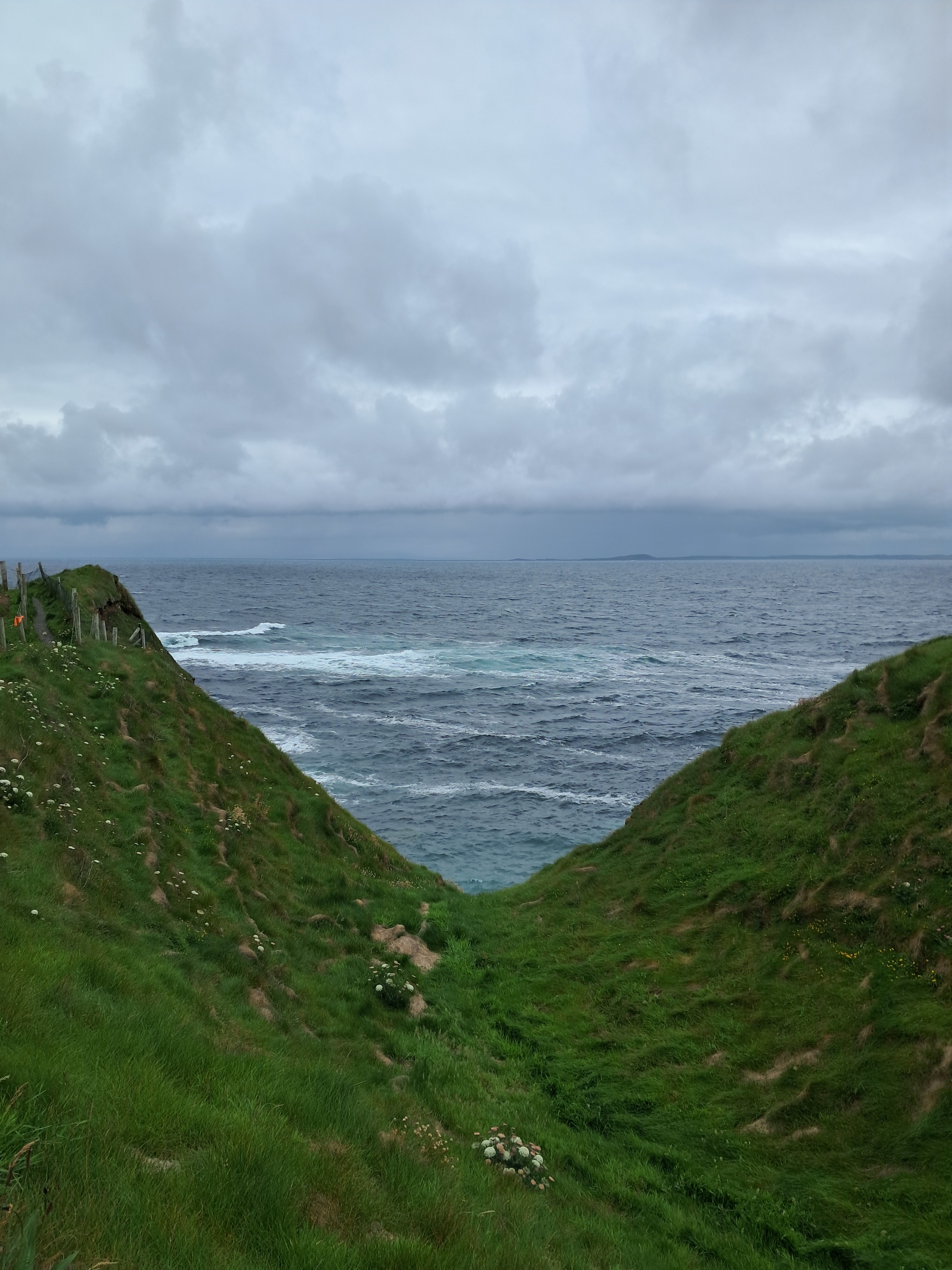
I decide to take my chances. I walk on. But that doesn’t seem an adequate refusal, so I turn back. I find three stones. I waste no words on them. I throw them, hard as I can, into the sea.
There must be other people like me who cannot and will not indulge the Church in its paper-thin apologies and hollow-sounding remedial measures that never quite seem to go far enough. What would be far enough for me? Women in positions of authoritative parity; married priests; doctrine changes on divorce, abortion and homosexuality? I’d take all of them, sure, but would it be enough? Fill the same old carboy with jasmine scent, it’ll still absorb leftover corrosive. The perfume will still burn your skin.
The Church will argue, of course, that its authority comes from God, but there’s my problem: I don’t believe that. And once you stop believing that, the whole thing unravels like a busted ponzi scheme. If there is any such thing as god, I doubt it would be all that invested in the exercise of power. The current global political condition shows us what unchecked, turbo-charged, pursuit of power can do. Godly? No, I don’t think so. Not even President Trump would go so far (would he?): he might crave the authority of the divine but hardly wants to bother with all that seeking enlightenment bumph. Though he might quite like the get-up. And the rallies are top notch.
I leave him there at St Patrick’s Well: if the religion doesn’t do him good (god knows, it didn’t do me any), maybe the wind will blow some humility into him.
The next stop is a WWII Look Out Post, a concrete hut manned during the ‘Emergency’ by volunteers on the watch for news of a different kind dropping from the sky. Specifically, German news, coming in from the west to launch its much-anticipated, surprise invasion of Ireland. Posters affixed to the wall have two advisory columns headed ‘German fighters’ and ‘British fighters’, but honestly, you’d be hard-pressed to spot the difference between a Junkers 88 and a Bristol Blenheim. ‘Note specifically the shape of the Airship and the position of the passenger cars’, the poster advises: fine if the airship is on the ground and you have all the time in the world to walk around it and compare it with the poster; a little less feasible if, by any chance, it’s dark. Or if, by any chance, the vessel’s on the move.

The Look Out Post volunteers logged sightings of many US planes, though its signal flares and emergency phone remained unruffled by any German invasion. Or Russian. Or Alien. Or divine. (Unlike Knock, an hour south of here, site of a Marian apparition in 1879; a place of pilgrimage to which my mother was devoted and for which I never fail to be grateful whenever I fly in or out of Knock airport. Originally devised to bring pilgrims in, it’s now more apt to carry sun-worshippers to Spain. Also unlike Carrowmore, twenty minutes east of here, a neolithic burial monument aligned to the setting sun at the summer solstice, a place I find both beautiful and profound.)
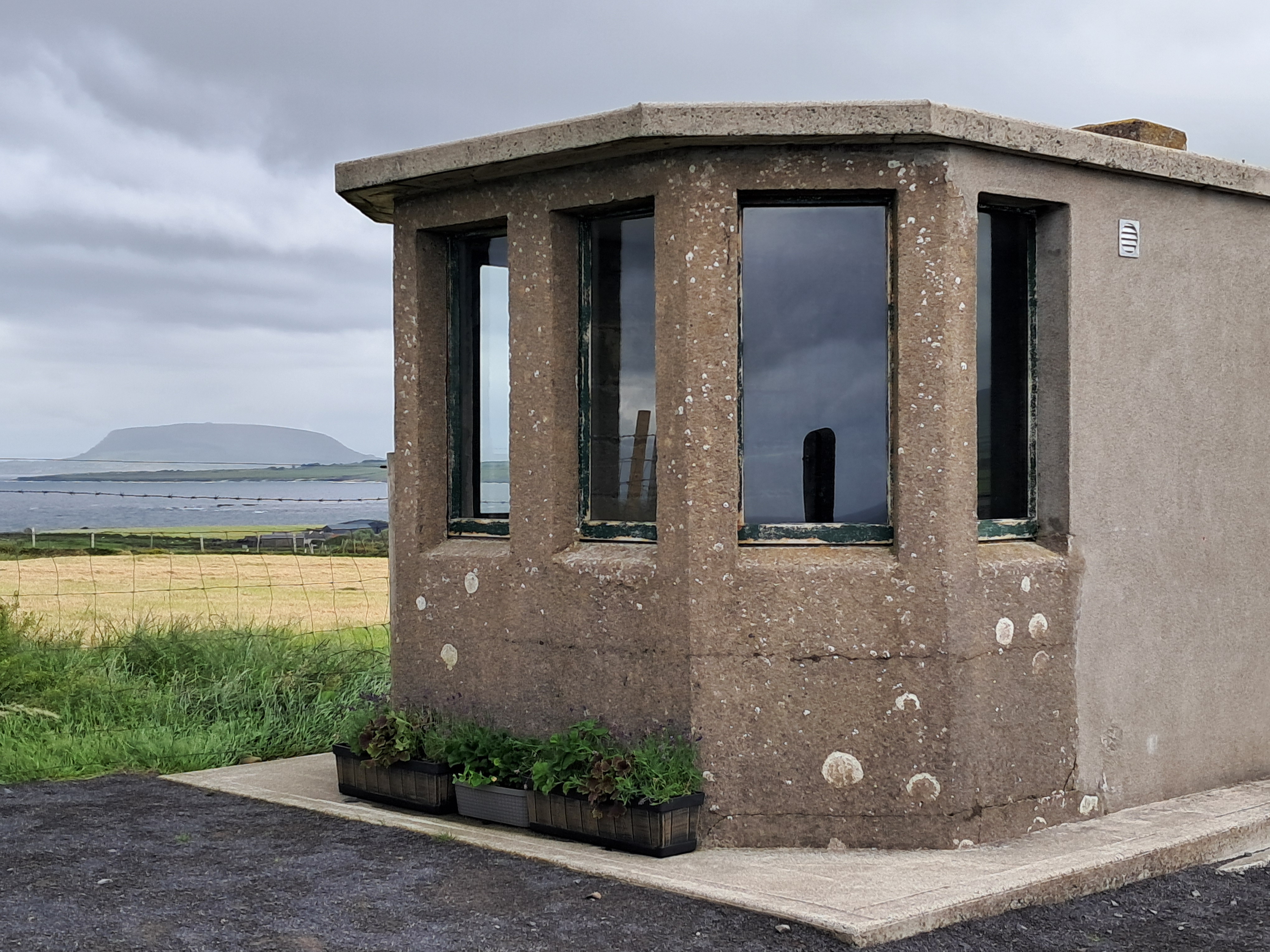
Someone has been improving the Look Out Post. There are mini window-boxes, and its six long, now glassed-in windows look out onto the kind of view that would have made a John Hinde postcard look exaggerated. There’s even a plastic picnic-table propped against the wall. Even a poem on a slate plaque outside, by one L.J. McHugh, 1944, the last lines of which read: ‘Before me lay fair Sligo Bay with its eternal roar, / White horses on its mighty waves, speeding towards the shore’.
The hut is a windbreak, a moment’s sanctuary. ‘Creep, Wretch, under a comfort serves in a whirlwind’, wrote Hopkins, and even this utilitarian, concrete hut has a kind of inbuilt comfort. Inside, I think of those volunteers and that time in Ireland – the danger of it, the hunger of it, the sense of impending doom – and the thinking brings me a kind of domestic complicity, a sense of myself and L.J. McHugh, somehow, magically, sharing time as well as space, hunkering in an outpost of a troubled world, finding in the chance of beauty some momentary redress. It’s the same feeling I once had at Skara Brae, Orkney’s lonely, neolithic settlement site, the human impulse to have domestic order, niceness (why else that niche? Why else those stone shelves?) as some kind of check to the wildness of the landscape, the futility of the vigil, the peril of the lives.
I relate more to the shelves of Skara Brae and the poem of L.J. McHugh than I ever will to the religious faith to which other people turn, in search of a similar check.
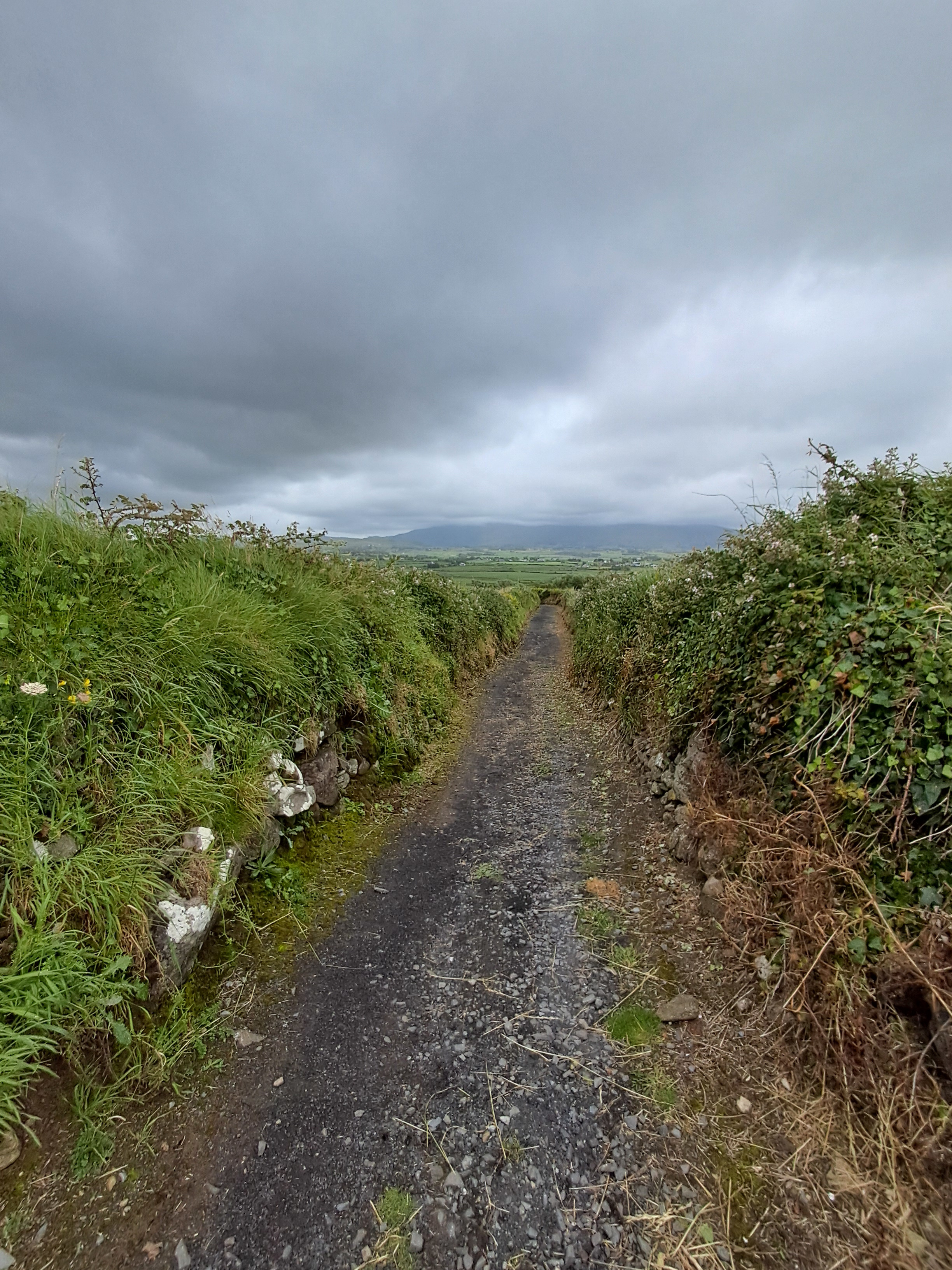
Credo: I believe in the language you find for yourself, even if fusty or inelegant, more than any pre-packaged, formulaic, officially-sanctioned prayers. I believe in sincerity. (I accept it’s not always as it appears.) I believe in small gestures more than ceremonies. But I also believe there’s something in me that balks against reducing the human condition to a matter of materiality. William Carlos Williams’ dictum, ‘No ideas but in things’ might be perfectly good advice for poetry, but it’s not great for life. Sometimes you’d be glad to find ideas in ideas.
Poetry is on good terms with abstraction, so long as it doesn’t toady to it, or go at it head-on with lots of abstract nouns falling over themselves to be highly significant in their suggestive capacity. There are times when the great abstractions (love, desire, grief, nuclear catastrophe – all that jazz) can be invoked with yoking them to objects (rings, underwear, locks of hair, iodine tablets etc); and there are times it’s just not enough.
Does renouncing religion mean that I automatically reject the possibility of the numinous, the traditional expression of this in Ireland being Catholicism? I hope not. I experiment: I recognise a degree of raw superstition in my make-up. I still make Brigid’s crosses on Feb 1st from the rushes in my back field, more out of respect for the folk tradition than Catholic ritual. I practise a kind of cod, John Clare-ish, pantheism, talking to the beech tree over my skylight, learning the names of weeds. I listen to Bach, of course I do. And love the paintings of Fra Angelico as much as I love Rembrandt. And when street evangelists ask me to take a leaflet or if I am saved, I always say, ‘Oh god, no’ and avail of their momentary confusion to make a getaway. I find I like the word ‘god’, if only in vernacular usage, stripped of reverence.
I try, I swear I do, to practise tolerance when people as heathen as I am tell me they’re getting married in churches, or having their babies baptized, (though this essay proves I may not quite succeed). They’re Cultural Catholics, I remind myself, as if that’s even a thing. (I prefer, I think, the term ‘Bouncy-castle Catholics’, coined to denote people who dip into religion only on those occasions when a bouncy castle is hired to keep the cousins entertained.)
But who am I to judge? Let people find comfort wherever they can, I suppose. Life can be very dispiriting and if the rituals of religion help when more practical comfort seems ineffectual, why should I disapprove? Isn’t that the function and purpose of all religion, to help? If only what I value in religious practice - comfort and kindness; room for mystery (what kind of a poet would I be to discredit this?); the beautiful, helpful possibility of the miraculous - could be unyoked from the machinery of oppression, power, and abuse.
The last ‘scene’ on the coastal walk before it turns itself out into an ordinary road between ordinary fields, is a village that had 812 residents in 1961, and now has fewer than ten. The information panel tells me that: ‘in 1901 the residents included 3 blacksmiths, 2 dressmakers, 2 publicans, 3 teachers, 2 tailors, 2 shopkeepers, a carpenter, a bootmaker, a washerwoman, and a plasterer’ before the collapse of the fishing industry and mass emigration converted Aughris Village to a series of tumbledown dwellings, poignant and bereft.
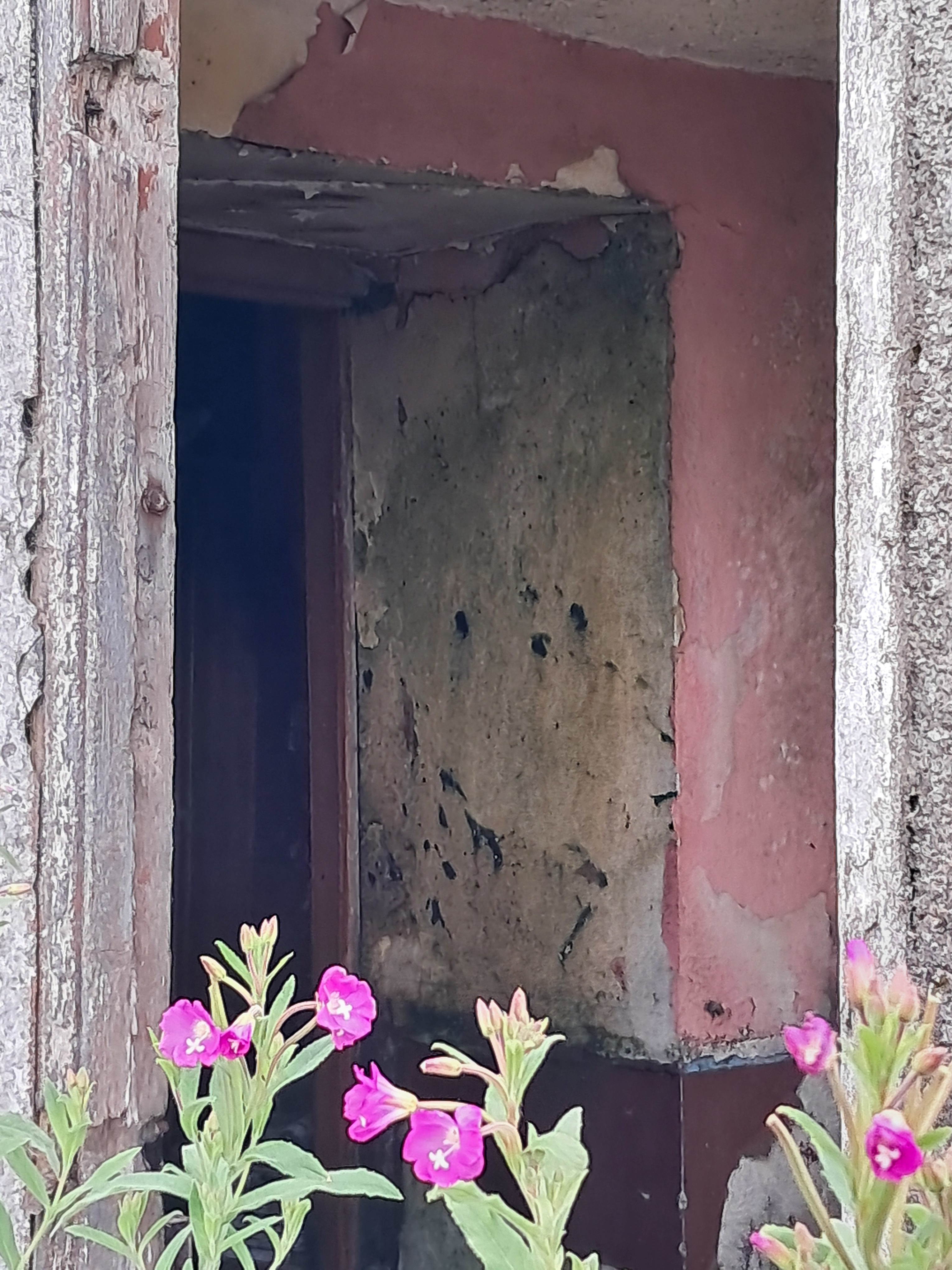
Through the long-gone door of one, I notice a bright pink wall, how it chimes with the pink of the fireweed outside. In another, a dresser is still visible against the back wall, drawers gaping, shelves empty but for a take-away coffee cup. The inside doors, I see, have been painted a nice green, and backboards, crafted to lock tight together, still hold the whole thing in place.
Care. Vigilance. A capacity for hope. A need for beauty, howsoever small or intimate. An investment in family and its environment. A way to denote ‘Home’. Green doors and pink walls to shut out a dangerous wind, a fearsome tide, the potentially catastrophic intrusions of politics, poverty, want and war.
At these green dresser doors, more resonant and beautiful to me than Ghiberti’s three expensive bronze doors of the Florence Baptistry, or the expensive Holy Doors of St Peter’s Basilica, I lay down my small capacity for faith.
In these doors, I trust.
This text, 'The Aughris Coastal Walk', is licensed under a CC BY-SA 4.0 license. No part of the Work may be used or reproduced in any manner for the purposes of training artificial intelligence technologies or systems. The Work is protected and reserved from text and data mining.





 Kaleidoscope III